Buy virtualearth.eu ?
We are moving the project
virtualearth.eu .
Are you interested in purchasing the domain
virtualearth.eu ?
domain@kv-gmbh.de · 0541-91531010
Buy virtualearth.eu ?
What is the logic problem regarding the kinetic energy of the Earth?
The logic problem regarding the kinetic energy of the Earth lies in the fact that according to the laws of physics, the Earth should be slowing down due to the transfer of its kinetic energy to other forms of energy, such as tidal friction. However, the Earth's rotation has remained relatively constant over millions of years, which challenges this expectation. This discrepancy raises questions about our understanding of the Earth's energy balance and the factors that influence its rotational speed. **
Isn't thermal energy kinetic energy?
Thermal energy is actually a form of internal energy within a system due to the motion of its particles. While kinetic energy is associated with the motion of an object as a whole, thermal energy is related to the random motion of particles within a substance. So, while thermal energy involves kinetic energy at the microscopic level, it is not the same as the kinetic energy of an object in motion. **

Similar search terms for Kinetic
Top-Angebote
Products related to Kinetic:
-
Uplifted Finds Accordion Morph Kinetic Scratcher Accordion Morph Kinetic ScratcherRevolutionize your pets interaction with the AccordionMorph Kinetic Scratcher, a highengagement geometry module engineered with transformativesurface logic. This professionalgrade toy features a highdensity honeycomb cardboard architecture that...80,97 $*Shipping: 0,00 $Secure redirect to the provider
-
Uplifted Finds Aero Flex Kinetic Organ Scratcher Aero Flex Kinetic Organ ScratcherTransform the way your cat plays and grooms with the AeroFlex Kinetic Organ Scratcher. This isn't just a scratching board; its a highenergy, transformable playground designed to satisfy a cats natural curiosity. Featuring a unique accordionstyle...97,97 $*Shipping: 0,00 $Secure redirect to the provider
-
Uplifted Finds High Velocity Kinetic Teaser Hub High Velocity Kinetic Teaser HubOptimize your pets physical agility and predatory reflexes with the HighVelocity Kinetic Teaser Hub, a professionalgrade interactive system engineered with telescopicextension logic. This highutility module features a specialized threesection...40,97 $*Shipping: 0,00 $Secure redirect to the provider
-
Uplifted Finds Kinetic Avian Predatory Interaction Hub Kinetic Avian Predatory Interaction HubOptimize your pets physical agility and mental acuity with the KineticAvian Interaction Hub, a professionalgrade enrichment module engineered with touchactivated flapping logic. This highperformance plush system features a specialized multisensory...57,97 $*Shipping: 0,00 $Secure redirect to the provider




-
How is kinetic energy calculated?
Kinetic energy is calculated using the formula: KE = 1/2 * m * v^2, where KE represents kinetic energy, m is the mass of the object in motion, and v is the velocity of the object. This formula shows that kinetic energy is directly proportional to the mass of the object and the square of its velocity. Therefore, an object with a greater mass or higher velocity will have more kinetic energy. **
-
What is relativistic kinetic energy?
Relativistic kinetic energy is the energy an object possesses due to its motion, taking into account the effects of special relativity. In classical physics, kinetic energy is given by the formula 1/2 mv^2, where m is the mass of the object and v is its velocity. However, at speeds approaching the speed of light, special relativity must be taken into account, and the formula for kinetic energy becomes more complex. The relativistic kinetic energy formula takes into account the increase in an object's mass as it approaches the speed of light, and is given by the formula E = (γ - 1)mc^2, where γ is the Lorentz factor, m is the rest mass of the object, and c is the speed of light. **
-
How to calculate the kinetic energy of a geostationary satellite depending on its height?
To calculate the kinetic energy of a geostationary satellite depending on its height, you can use the formula for kinetic energy: KE = 0.5 * m * v^2, where m is the mass of the satellite and v is its velocity. The velocity of a geostationary satellite can be calculated using the formula v = √(GM/r), where G is the gravitational constant, M is the mass of the Earth, and r is the distance from the center of the Earth to the satellite's orbit. By substituting the values of mass, velocity, and height into the kinetic energy formula, you can determine the kinetic energy of the geostationary satellite. **
-
How do you calculate kinetic energy?
Kinetic energy is calculated using the formula: KE = 0.5 * m * v^2, where KE is the kinetic energy, m is the mass of the object, and v is the velocity of the object. To calculate kinetic energy, you need to know the mass of the object in kilograms and the velocity of the object in meters per second. By plugging these values into the formula, you can determine the kinetic energy of the object in joules. **


Who has the greater kinetic energy?
The object with the greater kinetic energy is the one that has a higher mass and velocity. Kinetic energy is directly proportional to both mass and velocity, so an object with a larger mass or higher velocity will have greater kinetic energy. Therefore, the object with the greater kinetic energy would be the one that is heavier and/or moving faster. **
What is potential or kinetic energy?
Potential energy is the stored energy an object has due to its position or state, such as a ball held above the ground. Kinetic energy is the energy an object possesses due to its motion, like a moving car. Both forms of energy are important in understanding how objects interact and change in the physical world. **
Top-Angebote
Products related to Kinetic:
-
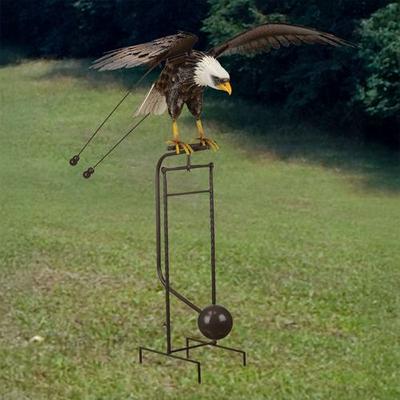
Regal Art & Gift - Drop Ship Kinetic Rocking Eagle Sculpture Multi Earth , Multi EarthThe majestic Kinetic Rocking Eagle Outdoor Sculpture soars to new heights in your garden area. Made of metal with a powder-coat finish, this grand eagle features pressed feathers in brown and ivory along with yellow feet and beak. On a secure prong...329,00 $*Shipping: 0,00 $Secure redirect to the provider
-
Regal Art & Gift - Drop Ship Kinetic Rocking Owl Sculpture Multi Earth , Multi EarthThe Kinetic Rocking Owl Sculpture is a wise choice for your garden area. Made of metal with a powder-coat finish, this delightful owl features pressed feathers in brown, ivory, white, and gray layered on its body and wings. Resting on a secure prong...219,99 $*Shipping: 0,00 $Secure redirect to the provider
-
Uplifted Finds Accordion Morph Kinetic Scratcher Accordion Morph Kinetic ScratcherRevolutionize your pets interaction with the AccordionMorph Kinetic Scratcher, a highengagement geometry module engineered with transformativesurface logic. This professionalgrade toy features a highdensity honeycomb cardboard architecture that...80,97 $*Shipping: 0,00 $Secure redirect to the provider
-
Uplifted Finds Aero Flex Kinetic Organ Scratcher Aero Flex Kinetic Organ ScratcherTransform the way your cat plays and grooms with the AeroFlex Kinetic Organ Scratcher. This isn't just a scratching board; its a highenergy, transformable playground designed to satisfy a cats natural curiosity. Featuring a unique accordionstyle...97,97 $*Shipping: 0,00 $Secure redirect to the provider
-
What is the logic problem regarding the kinetic energy of the Earth?
The logic problem regarding the kinetic energy of the Earth lies in the fact that according to the laws of physics, the Earth should be slowing down due to the transfer of its kinetic energy to other forms of energy, such as tidal friction. However, the Earth's rotation has remained relatively constant over millions of years, which challenges this expectation. This discrepancy raises questions about our understanding of the Earth's energy balance and the factors that influence its rotational speed. **
-
Isn't thermal energy kinetic energy?
Thermal energy is actually a form of internal energy within a system due to the motion of its particles. While kinetic energy is associated with the motion of an object as a whole, thermal energy is related to the random motion of particles within a substance. So, while thermal energy involves kinetic energy at the microscopic level, it is not the same as the kinetic energy of an object in motion. **
-
How is kinetic energy calculated?
Kinetic energy is calculated using the formula: KE = 1/2 * m * v^2, where KE represents kinetic energy, m is the mass of the object in motion, and v is the velocity of the object. This formula shows that kinetic energy is directly proportional to the mass of the object and the square of its velocity. Therefore, an object with a greater mass or higher velocity will have more kinetic energy. **
-
What is relativistic kinetic energy?
Relativistic kinetic energy is the energy an object possesses due to its motion, taking into account the effects of special relativity. In classical physics, kinetic energy is given by the formula 1/2 mv^2, where m is the mass of the object and v is its velocity. However, at speeds approaching the speed of light, special relativity must be taken into account, and the formula for kinetic energy becomes more complex. The relativistic kinetic energy formula takes into account the increase in an object's mass as it approaches the speed of light, and is given by the formula E = (γ - 1)mc^2, where γ is the Lorentz factor, m is the rest mass of the object, and c is the speed of light. **
Similar search terms for Kinetic
-
Uplifted Finds High Velocity Kinetic Teaser Hub High Velocity Kinetic Teaser HubOptimize your pets physical agility and predatory reflexes with the HighVelocity Kinetic Teaser Hub, a professionalgrade interactive system engineered with telescopicextension logic. This highutility module features a specialized threesection...40,97 $*Shipping: 0,00 $Secure redirect to the provider
-
Uplifted Finds Kinetic Avian Predatory Interaction Hub Kinetic Avian Predatory Interaction HubOptimize your pets physical agility and mental acuity with the KineticAvian Interaction Hub, a professionalgrade enrichment module engineered with touchactivated flapping logic. This highperformance plush system features a specialized multisensory...57,97 $*Shipping: 0,00 $Secure redirect to the provider
-
Uplifted Finds Aero Chime Kinetic Rainbow Chase Balls Aero Chime Kinetic Rainbow Chase BallsTurn daily exercise into a highspeed pursuit with the AeroChime Kinetic Rainbow Chase Balls. These interactive play spheres are specifically engineered to keep your cat physically fit and mentally sharp. Inside each durable, highvisibility plastic...34,97 $*Shipping: 0,00 $Secure redirect to the provider
-
Uplifted Finds Aero Flex Kinetic Cat Scratcher & Toy Aero Flex Kinetic Cat Scratcher & ToyUnleash your cat's natural instincts with the AeroFlex Kinetic Scratcher, a versatile 2in1 activity center designed to satisfy both the urge to claw and the drive to hunt. Unlike static scratching posts, this innovative accordionstyle toy features a...78,97 $*Shipping: 0,00 $Secure redirect to the provider
-
How to calculate the kinetic energy of a geostationary satellite depending on its height?
To calculate the kinetic energy of a geostationary satellite depending on its height, you can use the formula for kinetic energy: KE = 0.5 * m * v^2, where m is the mass of the satellite and v is its velocity. The velocity of a geostationary satellite can be calculated using the formula v = √(GM/r), where G is the gravitational constant, M is the mass of the Earth, and r is the distance from the center of the Earth to the satellite's orbit. By substituting the values of mass, velocity, and height into the kinetic energy formula, you can determine the kinetic energy of the geostationary satellite. **
-
How do you calculate kinetic energy?
Kinetic energy is calculated using the formula: KE = 0.5 * m * v^2, where KE is the kinetic energy, m is the mass of the object, and v is the velocity of the object. To calculate kinetic energy, you need to know the mass of the object in kilograms and the velocity of the object in meters per second. By plugging these values into the formula, you can determine the kinetic energy of the object in joules. **
-
Who has the greater kinetic energy?
The object with the greater kinetic energy is the one that has a higher mass and velocity. Kinetic energy is directly proportional to both mass and velocity, so an object with a larger mass or higher velocity will have greater kinetic energy. Therefore, the object with the greater kinetic energy would be the one that is heavier and/or moving faster. **
-
What is potential or kinetic energy?
Potential energy is the stored energy an object has due to its position or state, such as a ball held above the ground. Kinetic energy is the energy an object possesses due to its motion, like a moving car. Both forms of energy are important in understanding how objects interact and change in the physical world. **
* All prices are inclusive of VAT and, if applicable, plus shipping costs. The offer information is based on the details provided by the respective shop and is updated through automated processes. Real-time updates do not occur, so deviations can occur in individual cases. ** Note: Parts of this content were created by AI.